
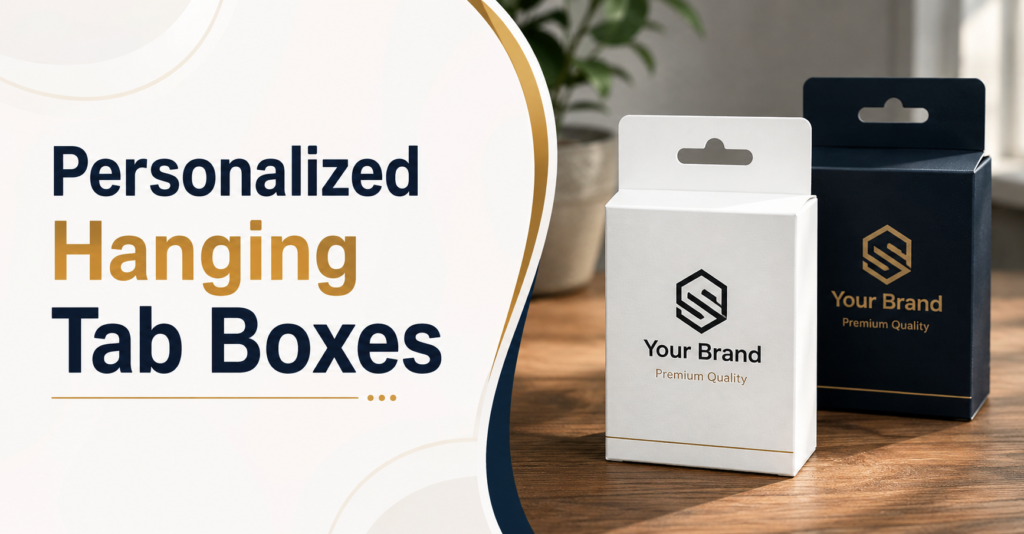
Gift retail operates on a purchase psychology that differs from every other retail category in ways that packaging decisions can either leverage or ignore. A shopper buying a product for themselves evaluates packaging as a quality signal and a functional container. A shopper buying a gift evaluates packaging as a proxy for the thoughtfulness of the giving gesture, and that evaluation happens at the shelf rather than at the unboxing moment. Personalized hanging tab boxes that carry individual names on peg display packaging compress the gift selection process for a specific type of shopper into something close to an impulse purchase, because the packaging has already made the selection feel personal before the shopper has decided to buy.
This mechanism has been commercially demonstrated with sufficient consistency across gift retail categories that it warrants serious consideration as a packaging strategy rather than a novelty. The brands whose personalized hanging tab boxes generate the highest sales conversion in gift retail environments understand which retail contexts activate the name-on-packaging psychology most effectively, what conditions must be present for individual name display to drive incremental sales rather than simply creating operational complexity, and where the mechanism fails to produce the expected outcome because the category, price point, or retail environment doesn’t support it. Understanding the distinction between contexts where personalized hanging tab boxes drive genuine sales uplift and contexts where they add cost without commercial return is the practical knowledge that gift retail buyers and brands need before committing to personalization as a packaging strategy.
What the Name-on-Packaging Psychology Actually Does
The psychological mechanism through which individual names on hanging tab boxes drive gift retail sales operates through a well-documented cognitive effect whose commercial applications extend well beyond packaging. When a shopper scanning a peg display sees their own name, or the name of someone they’re buying for, on a product, the product stops being generic inventory and becomes specifically relevant to them in a way that competes more favorably with their attention than surrounding products without this relevance signal.
This relevance mechanism creates two distinct commercial effects that gift retail personalization leverages simultaneously. The first is stopping power, the ability of the personalized packaging to interrupt the scanning behavior that most gift retail shoppers use to process a peg display efficiently. A shopper who would otherwise scan a display in two to three seconds without any single product earning extended attention pauses when they see a familiar name because the familiarity signal triggers a slower, more deliberate assessment than the standard scan produces. This pause increases the probability of product engagement, and product engagement in gift retail is strongly correlated with purchase conversion because the gift selection process depends on the shopper forming a connection between the product and the recipient.
The second effect is decision simplification. Gift retail shoppers experience a specific version of purchase uncertainty that shoppers buying for themselves don’t face in the same form. Buying for oneself involves matching a product to personal preference, which the shopper can assess directly. Buying for someone else involves predicting another person’s response to a product, which introduces uncertainty that many shoppers resolve by defaulting to familiar products, safe categories, or branded names they trust rather than experimenting with unfamiliar products. A personalized hanging tab box that carries the recipient’s name reduces this uncertainty by providing the shopper with a concrete reason why this specific product is appropriate for the person they’re buying for. The name on the packaging does the selection work that the shopper would otherwise need to do through reasoning, reducing the cognitive effort of the gift selection decision and improving the probability that the shopper completes the purchase rather than abandoning it through indecision.
Which Gift Retail Contexts Make Name Personalization Work
Name personalization on hanging tab boxes produces measurably different sales outcomes across different gift retail contexts, and the distinction between high-return and low-return personalization contexts is determined by several factors that are assessable before committing to a personalization program rather than discoverable only through post-launch performance data.
High-footfall gift destinations where shoppers are actively browsing for gift options rather than shopping with a specific product in mind represent the most commercially productive context for personalized hanging tab boxes. Destination gift shops, airport terminal retail, tourist attraction retail, and holiday-themed pop-up shops attract shoppers whose primary purpose is gift selection, creating an environment where the name-finding behavior that personalized displays generate is aligned with the shopper’s existing mindset. A shopper who entered the store planning to browse for a gift and who encounters a display of personalized hanging tab boxes carrying hundreds of individual names is already in a mode of active evaluation that the personalization display extends rather than interrupts.
Category-appropriate products create stronger name personalization effects than category-inappropriate ones. Gift categories where a personal connection between product and recipient is part of the expected value of the gift, including personal care, novelty items, accessories, and food and beverage gifts, support the name-on-packaging mechanism because the personalization reinforces the category’s existing gift logic. Products in categories where gift selection is more functional and less personal, including practical household goods, utility items, and commodity consumables, show weaker personalization effects because the name adds a personal dimension that the category’s gift logic doesn’t naturally support.
Price point alignment between product value and personalization investment determines whether the personalization premium generates commercial return. Gift products in the $8 to $25 retail range show the strongest response to name personalization because this price tier attracts impulse gift purchase behavior that personalization’s decision-simplification effect most powerfully supports. Products below $8 are often purchased in multiples or as incidental additions to larger gifts, reducing the selection deliberation that personalization shortens. Products above $30 attract more considered gift selection behavior that shoppers don’t resolve through packaging cues alone, reducing the standalone influence of name personalization on purchase conversion.
What Retail Formats Support Personalized Peg Display Most Effectively
The physical retail format within which personalized hanging tab boxes are displayed determines whether the display mechanics necessary for name personalization to work are practically achievable and whether the browsing behavior that makes name-finding commercially effective is realistic in the specific retail context.
Dedicated name-finding displays, where a full peg display section is organized alphabetically by name allowing shoppers to locate a specific name efficiently, create the retail experience that makes personalization commercially effective at scale. A display with 200 names organized in random peg order creates a frustrating search experience that reduces the behavior the personalization is designed to encourage. A display with the same 200 names organized alphabetically across clearly labeled peg rows creates a browsing experience that shoppers engage with actively and that generates the dwell time with the display that converts browsing into purchase.
Space allocation within the retail environment determines whether an alphabetical name display is physically achievable and visually coherent. A name display covering a significant range of common US names requires enough peg space to display them without the display looking depleted or chaotic, both of which reduce the browsing appeal that name personalization depends on. Retailers allocating adequate space for a complete alphabetical display, typically eight to twelve linear feet of peg space for a core name range of 150 to 300 names, create the display context that the personalization strategy is designed to perform within. Retailers attempting name personalization in two to three feet of peg space create a partial display that shoppers experience as limited inventory rather than as a personalization opportunity.
Staff familiarity with the display and its restocking logic affects display maintenance quality in ways that influence sales performance across the display’s operational life. A personalized name display that hasn’t been restocked to fill gaps in the alphabetical sequence creates a shopper experience where specific names are missing, which converts a positive engagement with the display concept into a frustrated departure without purchase. Retailers who invest in staff training around the restocking logic of alphabetical name displays, and who allocate regular restocking time to the display, maintain the browsing experience quality that keeps the commercial mechanism functioning across the display’s full operational period.
What Name Range Decisions Determine Program Viability
The selection of which names to include in a personalized hanging tab box program determines both the program’s commercial coverage and its operational complexity, and the decision is more consequential than it might initially appear because it affects both the inventory management requirements and the proportion of gift retail shoppers who find a relevant name when they browse the display.
US name coverage analysis based on Social Security Administration naming data shows that the fifty most common US names account for approximately 30 to 35 percent of the US population, meaning a display of fifty names will find a direct name match for roughly one in three shoppers who encounter it. Expanding to 150 names increases coverage to approximately 50 to 55 percent of shoppers. Expanding to 300 names increases coverage to approximately 65 percent. The incremental coverage return from expanding the name range declines rapidly above 300 names as progressively less common names are added, while the inventory management complexity and display space requirement increases proportionally with each addition.
The practical recommendation that emerges from coverage analysis is a core range of 100 to 150 names that provides coverage for the majority of shoppers while keeping the display space requirement and inventory management complexity within ranges that most gift retail environments can accommodate operationally. This range covers roughly 50 percent of the US population by name and creates a display of sufficient size to feel abundant to shoppers without requiring the space allocation that larger name ranges demand.
Name selection within the core range should reflect the demographic profile of the specific retail location rather than national average name frequency. A gift retail location in a market with significant Hispanic population benefits from incorporating Spanish-language name variations, including both the anglicized and original-language versions of common names, because the coverage increase in the local market is substantially higher than national average data suggests. A retail location whose footfall skews toward older demographics benefits from incorporating names common in older generations that don’t appear in top-fifty lists reflecting contemporary naming patterns.
Gender-neutral name inclusion addresses the practical gift buying scenario where a shopper knows the recipient’s name but not their preferred gender expression. Including gender-neutral name options in the core range serves shoppers who want to avoid gender assumptions through their gift selection, and the commercial opportunity in this shopper segment is growing in ways that name range decisions developed against historical naming data alone don’t capture.
What the Per-Unit Economics of Name Personalization Actually Look Like
The cost structure of personalized hanging tab boxes differs from standard custom hanging tab boxes in ways that affect the financial viability of personalization programs at different production volumes, and understanding the actual per-unit economics prevents the cost surprises that brands encounter when they receive their first personalization quote.
Variable data printing, which applies a different name to each box during a single production run, requires digital printing equipment and production workflows that cost more per unit than standard single-design digital printing but considerably less than producing each name as a separate print run. Variable data production at typical name program quantities of 100 to 300 boxes per name, with 150 distinct names creating a total production run of 15,000 to 45,000 units, produces per-unit costs in the $0.90 to $1.60 range depending on box specification, finishing, and production volume. Standard custom hanging tab boxes without personalization at equivalent volumes typically produce per-unit costs of $0.55 to $0.90, creating a personalization premium of $0.30 to $0.70 per unit.
This per-unit premium needs to be evaluated against the retail price premium that personalization supports rather than against the cost of standard packaging alone. Gift retail products in personalized hanging tab boxes consistently command retail price premiums of $1.50 to $4.00 above equivalent non-personalized products in the same category, reflecting the gift convenience value that name personalization creates for the shopper. A personalization premium of $0.50 per unit that supports a retail price premium of $2.00 per unit creates $1.50 of gross margin contribution per unit from the personalization alone, a return that justifies the production cost differential by a factor of three.
Inventory management costs specific to name programs represent an additional cost category that personalization program economics need to account for. Managing 150 distinct SKUs rather than a single standard design requires tracking inventory levels by name, identifying which names are depleting faster than others, and making restocking decisions that balance the desire to maintain alphabetical display completeness against the carrying cost of slow-moving names whose demand is lower than average. This inventory management overhead has real labor cost implications that brands building their first name program frequently underestimate, and it should be incorporated into program cost modeling alongside the per-unit production premium.
What Operational Requirements Brands Must Address Before Launch
Launching a personalized hanging tab box program for gift retail requires operational preparation that standard custom packaging programs don’t need, and addressing these requirements before launch rather than discovering them during rollout prevents the program disruption that operational gaps create at the point when the program is generating its highest commercial attention.
Demand forecasting by name requires historical data that first-time name program operators don’t have, making initial inventory allocation decisions genuinely uncertain. The standard approach for first-time programs is to order proportionally to national name frequency data, producing more units of top-ten names and proportionally fewer units of less common names in the core range. This approach produces a reasonably accurate initial inventory allocation but will be refined through actual depletion data from the first operating period.
Restocking lead time management is critical for name programs because a display with visible gaps in its alphabetical sequence loses the browsing experience quality that drives sales conversion. Standard custom hanging tab box reorder lead times of eight to ten business days from order placement to delivery create a replenishment window that names depleting rapidly can outpace, particularly during peak gifting periods when sell-through rates accelerate and standard reorder lead times become insufficient to maintain display completeness.
Display maintenance protocols including alphabetical organization, gap identification, and systematic restocking need to be documented and trained before the display is installed rather than developed reactively when restocking needs create operational pressure. A written display maintenance guide specific to the program, covering how to identify which names need restocking, how to organise new delivery stock into the existing alphabetical display, and what to do when a name is temporarily out of stock, gives retail staff the operational clarity that keeps the display performing at the level the personalization investment was designed to produce.
Aly Packaging USA manufactures personalized hanging tab boxes with variable data printing capability, Mylar tab reinforcement, and board grade specifications suited to gift retail peg display environments. Orders start from 25 units per name with 8 to 10 business day standard turnaround. Call 1-844-259-7225 or email sales@alypackaging.com to discuss name program specifications and production planning for your gift retail program.