
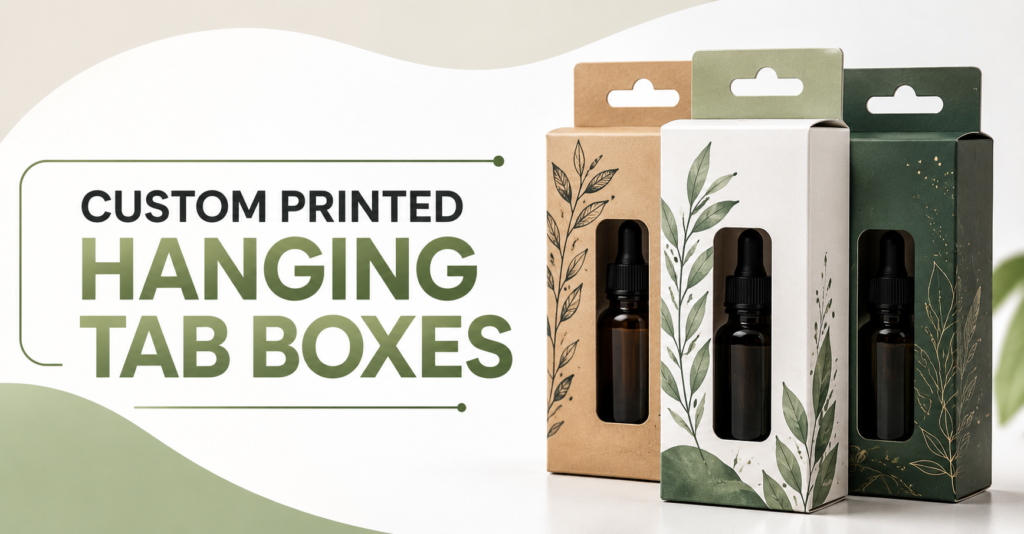
Retail placement is considerably harder to win than it is to lose, and the seasonal reset cycle is one of the less- discussed ways that brands with custom printed hanging tab boxes lose placements they worked months to secure. A hardware accessories brand receives confirmation of a Home Depot peg placement in February, ships initial inventory, and watches the product sell through its first cycle successfully. In September, the brand launches a seasonal design refresh for its hanging tab box packaging, ships the updated inventory to the distribution centre, and discovers three weeks later that the updated boxes have been quarantined at receiving because the dimensions shifted by four millimetres during the redesign process, making them incompatible with the planogram slot confirmed for the original version. The product hasn’t changed. The placement hasn’t changed. The packaging changed in a way the brand didn’t flag as a compliance event, and the retailer’s systems treated it as one.
This scenario recurs with enough frequency across US retail channels that understanding what triggers a compliance review during a packaging design change and what doesn’t is commercially valuable knowledge for any brand managing custom printed hanging tab boxes across seasonal campaigns. The brands that navigate seasonal design changes without losing placements aren’t necessarily doing more sophisticated creative work. They’re doing more disciplined operational work in the period between design approval and retail submission, managing the interface between their creative decisions and their retailer’s compliance requirements in a way that prevents design changes from becoming supply chain events.
What Retail Systems Actually Monitor During Seasonal Packaging Changes
The compliance infrastructure that major US retailers operate around their supplier base monitors packaging changes with more specificity than most brands appreciate until a change triggers a review. Understanding what these systems track determines which design changes require formal notification and which can proceed without retailer communication.
Dimensional changes are the most reliably monitored parameter. Retailer planogram systems store product dimensions as the reference data confirming that a product fits its allocated shelf slot. When a product arrives at a distribution centre whose packaging dimensions differ from the stored reference data, even by millimeters, the receiving system may flag the discrepancy as a potential non-conformance. Some retailers apply tolerance ranges within which dimensional variation doesn’t trigger a review. Others apply zero-tolerance policies where any dimensional deviation from submitted specifications requires a formal change notification before the updated packaging can be processed through the distribution center.
Barcode changes are monitored with equal precision because the UPC or EAN code on a hanging tab box connects the physical product to the retailer’s inventory, pricing, and ordering systems. A brand that updates its seasonal packaging and introduces a new barcode, or modifies barcode placement in ways that affect scan reliability at receiving or point-of-sale, creates system-level disruption that retail operations teams document as a supplier compliance issue. Barcode changes associated with seasonal design updates need explicit retailer communication and system update lead time before the updated packaging ships, not concurrent with or after shipping.
Weight changes trigger dimensional weight recalculation in freight systems and may affect how the product is classified within the retailer’s inventory management system. A seasonal design change that modifies board grade, adds a structural element, or changes packaging material in ways that affect product weight needs to account for this downstream effect in the change management process.
What Types of Design Changes Require Formal Retailer Notification
The distinction between design changes that require formal retailer notification and those that can proceed without it sits at the center of effective seasonal packaging management, and most brands don’t have a clear internal policy around where this line falls until a change triggers an unintended compliance event.
Structural changes always require formal notification. Any modification to the hanging tab box’s physical dimensions, structural construction, or closure mechanism constitutes a structural change regardless of how minor it appears from a design perspective. Increasing the box depth by five millimetres to accommodate a slightly larger product variant is a structural change. Moving from a tuck-top closure to a glued closure is a structural change. Adding a window cutout to an existing design is a structural change. Each of these requires advance notification to the retailer’s category and compliance teams before updated packaging ships and, in many cases, requires a formal change request submission through the retailer’s vendor portal.
Print and graphic changes that don’t affect dimensions or barcodes occupy a more ambiguous territory whose treatment varies by retailer. Target’s vendor compliance documentation treats significant graphic changes, defined as changes that substantially alter the product’s visual identity, as requiring notification even where dimensions and barcodes remain unchanged, because significant visual changes affect how the product registers in the retailer’s planogram photography and how it performs in consumer-facing digital assets including the retailer’s own website and app listings. Walmart’s vendor standards apply a similar framework. Understanding the specific notification requirements for each retail partner is the only reliable way to manage this ambiguity, which requires reading the vendor compliance documentation for each retailer rather than applying a single universal standard.
Sustainability and material changes that affect recyclability claims, recycled content percentages, or material certifications require notification because these attributes increasingly appear in retailer product databases and consumer-facing product information systems. A seasonal design change that switches from one board grade to another, changes the lamination specification, or modifies the printing method in ways that affect the packaging’s environmental profile needs to be communicated to the retailer’s sustainability or packaging compliance team in addition to the standard change notification process.
How to Execute a Seasonal Design Change Without Disrupting Retail Operations
The brands that consistently execute seasonal custom printed hanging tab box design changes without losing retail placement follow a process whose key characteristic is treating the retailer’s operational requirements as a design constraint rather than an afterthought. This constraint-first approach changes the sequence of the design development process and changes the timeline planning that surrounds it.
Beginning the seasonal design change process with a compliance audit of the proposed changes against each retail partner’s change notification requirements establishes the operational framework before any creative work begins. This audit answers three questions: which proposed changes require formal notification, what lead time does each retail partner require for change notification before updated packaging can ship, and what submission format does each retailer’s vendor portal require for change notifications. These answers determine the project timeline rather than being discovered during the shipping preparation phase when they can no longer be accommodated without delaying the launch.
Preserving confirmed dimensions as non-negotiable constraints within the creative brief eliminates the most common compliance trigger from seasonal design changes. A creative brief that specifies exact finished box dimensions as fixed parameters, with a note that any structural modification requires a separate compliance review and retailer notification cycle, directs the design team toward surface-level design changes rather than structural modifications. Seasonal design variety that communicates freshness through color, typography, and imagery changes within a fixed structural template is achievable without triggering the compliance events that structural modifications create.
Barcode continuity management needs explicit attention in the briefing process for seasonal hanging tab box designs. Where the seasonal update represents a design refresh on the same product without any product formulation or content change, the existing barcode should carry through to the updated packaging without modification. Changes to barcode placement should be evaluated against the scan rate performance requirements for each retail partner before finalizing the updated artwork, since repositioning a barcode within an updated graphic layout can create contrast or quiet zone issues that weren’t present in the original design.
Advance notification lead times need to be built into the seasonal launch timeline before the creative development process begins rather than being added to the timeline after artwork is approved. A retail partner requiring six weeks’ advance notification of packaging changes needs that notification submitted six weeks before the updated packaging arrives at the distribution center, which means the notification needs to be ready six weeks before the shipping date, which means the artwork and compliance review need to be complete before that. Working this lead time backwards from the intended in-store date for the seasonal update produces the actual design development deadline that the creative process needs to meet.
What Happens When Brands Skip the Notification Process
The commercial consequences of proceeding with a seasonal hanging tab box design change without completing the required retailer notification process range from distribution center holds that delay the seasonal launch to compliance chargebacks that erode the profitability of the placement the brand was trying to refresh.
Distribution centre holds place the updated packaging inventory in quarantine while the retailer’s compliance team investigates the change that triggered the hold. During this period, the brand’s allocation on the retail peg may be unfilled as existing inventory sells through without replacement. An unfilled peg allocation generates its own compliance signal in the retailer’s inventory system, which may trigger a ranging review that questions whether the product’s velocity justifies continued planogram allocation. A seasonal design change intended to refresh the product’s retail presence can, through the distribution center it holds, create and produce the opposite effect.
Compliance chargebacks applied by retailers to suppliers who ship non-conforming packaging add direct financial cost to the compliance failure. Chargeback rates vary by retailer and by the specific violation but typically range from $250 to $2,500 per incident for packaging-related non-conformances at major US retailers. A seasonal design change that ships simultaneously to fifty stores generates fifty individual non-conformance incidents if the packaging fails the distribution center compliance check, creating chargeback exposure that multiplies the financial impact of a single compliance oversight.
Relationship damage at the category buyer and compliance team level accumulates with each compliance incident in ways that don’t appear on a single invoice but affect the quality of the commercial relationship over time. Category buyers managing their own performance metrics around supplier compliance rates become less likely to advocate for placement expansion, promotional opportunities, or planogram improvements for brands whose compliance history includes preventable incidents. The compliance relationship with the retailer’s operations team is as commercially significant as the commercial relationship with the category buyer, and seasonal design changes that create avoidable compliance incidents damage both simultaneously.
How Inventory Management During Design Transitions Affects Placement Security
The transition from outgoing seasonal custom printed hanging tab boxes to updated seasonal designs creates an inventory management challenge whose resolution directly affects whether the retail peg remains consistently stocked during the changeover period, and a consistently stocked peg is one of the most important signals of product health in the retailer’s ranging assessment.
Running outgoing inventory down to zero before updated inventory ships creates a gap period where the peg is empty. An empty peg allocates zero revenue to the category for the duration of the gap, which is a performance signal that category managers notice and that competing brands may use as an opportunity to request planogram reallocation. Managing the inventory transition to maintain continuous peg coverage, which means timing the depletion of outgoing inventory and the arrival of updated inventory to overlap rather than to gap, requires more precise demand forecasting and shipping coordination than brands accustomed to managing single-run inventory typically apply.
Overstock of outgoing seasonal designs creates its own problem when updated inventory arrives at the distribution center and the retailer’s systems see two active inventory versions of the same product attempting to coexist in the same planogram slot. Most retailer systems handle this through a cutover date after which only the updated design is shipped and the outgoing design is discontinued, but managing the residual outgoing inventory that remains in the brand’s possession after the cutover requires either a write-off decision or an alternative sales channel for the outgoing design that doesn’t conflict with the updated retail inventory.
Safety stock planning for the updated seasonal design needs to account for the lead times of the full restocking cycle rather than just the production lead time. Custom printed hanging tab boxes require a production lead time of eight to ten business days plus shipping time from the production facility to the brand’s warehouse, plus the distribution center processing time before inventory is available for store allocation. Planning safety stock against this full lead time prevents the situation where updated seasonal inventory sells faster than anticipated and the brand discovers a reorder lead time of three to four weeks standing between them and a stocked retail peg.
What Brands Should Build Into Their Annual Seasonal Planning Cycle
The brands whose seasonal custom printed hanging tab box design transitions consistently succeed at retail operate from an annual planning framework that coordinates creative development, compliance management, and inventory logistics as a unified process rather than as three separate workstreams managed by different teams on different timelines.
Building the retail partner notification requirements for each seasonal design change into the annual planning calendar at the start of the year creates the visibility that allows creative and logistics teams to work backward from notification deadlines rather than discovering them after artwork is approved. This calendar becomes the operational framework around which all subsequent seasonal planning decisions are made, and its existence prevents the last-minute timeline compression that forces brands into choosing between delaying a seasonal launch and skipping the notification process.
Creating a master specification document for each retail partner that records confirmed dimensions, barcode specifications, and any other compliance parameters confirmed during initial ranging establishes the reference standard against which every seasonal design change is evaluated before creative development begins. This document, updated whenever a compliance parameter changes through formal retailer approval, serves as the institutional memory that prevents well-intentioned design changes from inadvertently modifying confirmed parameters.
Designating a single internal owner for retail compliance across seasonal packaging changes, rather than distributing compliance responsibility across the design, marketing, and operations teams who each manage different aspects of the seasonal process, creates accountability for the compliance steps that fall between creative approval and shipping confirmation. This owner’s role isn’t to do all compliance work but to ensure every step of the process is completed by whoever is responsible for it, on the timeline that the retail partner’s requirements dictate.
Aly Packaging USA manufactures custom printed hanging tab boxes with consistent dimensional specifications across seasonal design variations, supporting brands managing retail compliance across multiple US retail partners. Orders start from 25 units with an 8- to 10-business-day standard turnaround. Call +1 (844) 259-7225 or email sales@alypackaging.com to discuss seasonal design transition planning for your hanging tab box program.