
Three years building a direct-to-consumer brand teaches founders exactly the wrong instincts for retail packaging. Every decision that works online, photography-first presentation, narrative-heavy copy, structural packaging optimised for the unboxing moment, actively works against the requirements of a retail peg environment where a product has two seconds to earn a stranger’s attention before they move on. The transition from DTC to retail isn’t a packaging upgrade. It’s a packaging replacement, and brands that treat it as an incremental refinement of what already worked online spend money twice: once building packaging their retail buyers reject, and again rebuilding it to specification after the rejection.
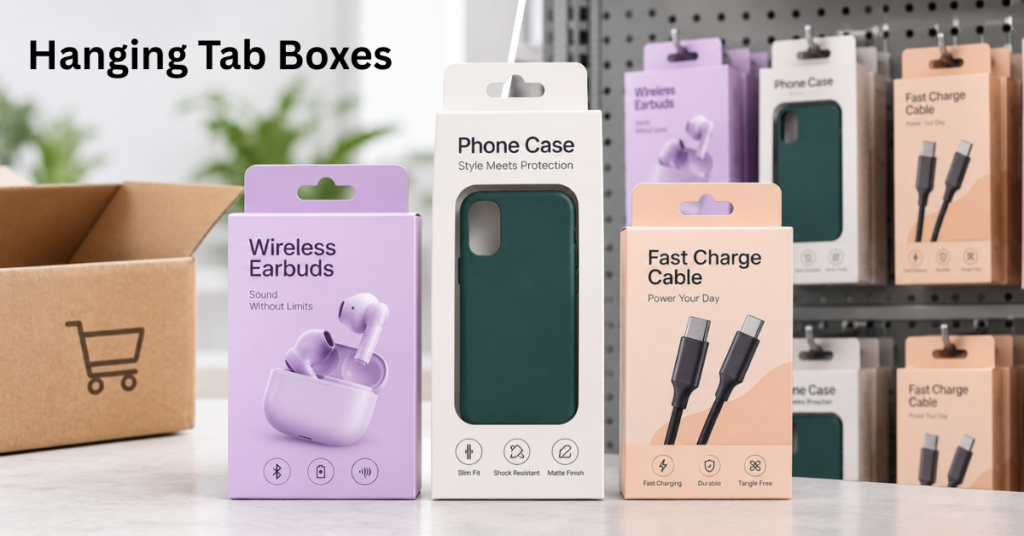
Custom hanging tab boxes sit at the centre of this transition challenge for product categories where peg display is the standard retail format. Understanding what specifically changes between DTC packaging logic and retail peg logic, before production begins rather than after buyer submission, determines whether a brand’s retail entry costs one packaging development cycle or two.
Why DTC Packaging Logic Fails on Retail Pegs
Direct-to-consumer packaging operates within a controlled environment that retail packaging never encounters. A product shipped in DTC packaging travels inside a mailer box or poly bag, arrives at a customer who already purchased the product, and gets opened in private where the entire unboxing sequence can unfold across thirty seconds or more. The packaging doesn’t need to earn the sale. The sale already happened. DTC packaging earns the second purchase through the quality of the experience it creates after the transaction.
Retail peg packaging operates in the opposite sequence. The sale hasn’t happened yet. The product sits on a hook among dozens of competing products, visible from three to five feet away, handled briefly by shoppers who haven’t committed to purchasing, and evaluated in under three seconds by a consumer making a comparison decision in real time. The packaging has to earn the first purchase from a stranger who has never encountered the brand, in a physical environment the brand doesn’t control, under lighting conditions the brand didn’t specify, alongside competitor products the brand can’t anticipate.
This sequence reversal changes every design priority. DTC packaging can afford to reward attention with narrative, detail, and textural interest discovered through handling. Retail peg packaging needs to communicate its core value proposition from three feet before the shopper picks it up, because most shoppers who don’t pick it up won’t buy it. Information hierarchy on DTC packaging flows from brand to product story to purchase reinforcement. Information hierarchy on retail peg packaging flows from category signal to product benefit to brand identity, in that sequence, because a shopper scanning a peg display needs to identify what the product does before they care who made it.
Structural decisions that serve DTC packaging well actively create problems on retail pegs. Mailer-style closures, magnetic closures, and ribbon-pull features that create premium unboxing moments add weight, cost, and thickness that peg display environments don’t accommodate. Packaging optimised for shipping durability carries structural weight the retail peg has to support, and every gram of structural packaging that isn’t serving the retail display function is contributing to the hook load calculation that determines whether the tab construction holds or fails over weeks on a display hook.
What Retail Buyers Actually Evaluate That DTC Brands Don’t Expect
The gap between what DTC brands think retail buyers evaluate and what retail buyers actually evaluate creates the majority of first-submission rejections for brands entering peg retail for the first time. Retail buyers spend considerably less time evaluating packaging aesthetics than DTC brands anticipate, and considerably more time evaluating operational compatibility than those same brands prepare for.
Planogram compatibility is the first filter most DTC brands don’t know exists. Before a buyer evaluates whether a product belongs in their category, the packaging needs to physically fit the shelf slot allocated to that category. Peg hook spacing in major US retail environments follows standardised configurations that differ between mass market, drug, specialty, and hardware retail, and a hanging tab box developed without reference to the specific peg configuration of the target retail environment may be physically incompatible with the display system regardless of product merit. Buyers who have seen this problem before identify it immediately from sample dimensions. Buyers who haven’t seen it still can’t approve placement without planogram fit.
Facings calculation drives how buyers think about value per shelf inch. A hanging tab box that’s 15 percent wider than the category standard holds the same product but delivers fewer facings per linear foot of peg space than a competitor whose packaging was designed around category dimension conventions. Buyers managing scarce peg space treat packaging that wastes facings as a commercial problem, not an aesthetic preference, and the solution requires structural redesign rather than graphic revision.
Tab construction quality is something retail buyers assess physically rather than visually. An experienced buyer picking up a hanging tab box sample immediately evaluates the tab area by feel, checking whether the reinforcement is adequate for the product weight and the expected duration of peg display. DTC brands whose packaging uses standard tab construction without reinforcement, adequate for the limited handling their products receive in transit and unboxing, often don’t realise buyers are making this assessment until a submission comes back with structural concerns attached to what they thought was a visual review.
Barcode placement and scannability receive almost no attention in DTC packaging because DTC fulfillment systems scan at a different point in the process. Retail receiving and point-of-sale scanning require barcode placement meeting specific orientation and quiet zone requirements that differ by retailer. A barcode placed on a curved surface panel, printed over a design element that reduces contrast, or positioned on a panel not accessible from standard scanner orientation creates processing problems that buyers identify as supplier compliance failures rather than fixable design details.
How Packaging Dimensions Need to Change for Peg Display
DTC packaging dimensions are typically determined by product dimensions plus structural requirements for shipping protection, with some aesthetic consideration around proportions that feel premium at the unboxing moment. Retail peg packaging dimensions need to be determined by a different set of inputs entirely, and the dimensional conversation should happen before design begins rather than after.
Category benchmarking establishes the dimension conventions that a product’s retail category has settled on through years of planogram management by buyers who optimised for facings, shopper visibility, and peg load distribution. Walking the specific retail channel where placement is being sought, measuring the physical dimensions of existing products on peg hooks in the target category, and recording the range of widths, heights, and depths represented, provides the dimensional framework within which a new product’s packaging needs to sit. Products outside this range without a compelling operational reason face planogram resistance that aesthetics alone won’t overcome.
Hanging dimension, the measurement from the top of the tab hole to the bottom of the box, determines how products sit relative to each other on multi-hook display systems and affects shopper sightlines to products on lower hooks. Hanging dimensions that vary significantly from category conventions disrupt the visual organisation of peg displays in ways that store merchandising teams find difficult to manage and buyers anticipate as an operational problem before it occurs.
Box depth relative to peg projection matters in retail environments where peg hooks project a fixed distance from the display panel. A hanging tab box whose depth approaches or exceeds the peg projection creates a tipping moment that destabilises the product on the hook and increases the likelihood of product falling from display during customer browsing, a problem that generates store incident reports and damages supplier relationships with buyers who track damage rates by vendor.
Width-to-weight ratio affects how multiple products on a single hook interact during customer handling. When a shopper removes one product from a multi-product hook, remaining products slide forward under their own weight. Boxes whose width creates significant contact surface with neighbouring products experience surface scuffing from this sliding movement over weeks of display, producing visible packaging degradation that affects remaining stock presentation before it’s purchased.
What Graphic and Print Specifications Need to Recalibrate
The graphic design decisions that perform well in DTC photography and digital presentation need systematic recalibration for retail peg display, and this recalibration affects not just aesthetic choices but technical print specifications that determine how the packaging reads in physical retail lighting conditions rather than in controlled photography environments.
Information hierarchy needs to lead with category identification rather than brand identity. DTC packaging can lead with brand because shoppers arriving at a DTC website or social media profile already know what category they’re browsing. A shopper scanning a peg display at a retail chain they visited for an unrelated purpose needs to understand in under a second what category of product they’re looking at before they can evaluate whether it’s relevant to them. Category signal at the top of the front panel, supported by the primary benefit claim in the second visual tier, positions brand identity as confirmation rather than introduction.
Typography legibility at distance requires testing under retail lighting conditions rather than in design software at screen resolution. Text that reads clearly on a monitor at normal viewing distance may not be legible at three to five feet under the cool fluorescent lighting common in mass market retail environments. Running physical print tests of front panel typography under representative retail lighting conditions before finalising artwork catches legibility problems at a stage where text weight, size, and colour can be adjusted without structural redesign.
Colour selection needs to account for how retail lighting shifts colour appearance relative to the controlled photography lighting under which DTC packaging is typically evaluated. Cool fluorescent retail lighting shifts warm colours toward orange and mutes certain red tones, while intensifying cool blues and greens. A brand colour that reads precisely on a photography backdrop may read noticeably differently under the lighting conditions of the specific retail channels being pursued. Testing print samples under representative retail lighting before finalising production artwork prevents colour surprises that can’t be corrected without a reprint.
Competitive shelf context changes the visual strategy in ways DTC packaging never faces. DTC presentation involves a controlled environment where the product is the only item in the frame. Retail peg placement puts the product next to competing products whose packaging colours, structural shapes, and information hierarchies create a visual context that affects how the new product reads. Brands that evaluate their retail packaging in isolation, without mocking up how it sits beside actual competitor products on a representative peg display, often discover that packaging which looked distinctive in isolation becomes lost in category context at retail.
What Structural Changes Are Non-Negotiable for Peg Display
Several structural characteristics of DTC packaging that can remain in place without harm in a shipping environment create genuine problems in peg retail environments and need to change before retail launch regardless of how they performed in DTC operations.
Tab reinforcement is the most consistently overlooked structural requirement for DTC brands entering retail. DTC packaging with hanging tab features uses those tabs primarily for presentation or secondary display purposes, not as the primary load-bearing element for sustained weeks-long peg display. A product that might hang from a display hook at a pop-up market for a few hours doesn’t stress its tab construction the same way a product spending six weeks on a mass market retail peg does. Mylar or acetate reinforcement at the tab slot area, combined with a minimum board grade appropriate for the product weight and a tab slot geometry using rounded ends rather than rectangular corners, provides the structural baseline that retail peg display requires. This reinforcement adds modest per-unit cost, typically $0.08 to $0.22 depending on patch size and board specification, but represents the difference between a product that maintains retail display position for its full shelf life and one that generates incident reports within the first two weeks of placement.
Structural simplicity improves retail performance in ways that feel counterintuitive to DTC founders accustomed to investing in packaging complexity as a quality signal. Magnetic closures, multi-layer constructions, and structural features optimised for the unboxing experience add weight that works against peg hook load calculations, add thickness that affects planogram compatibility, and add cost that compresses margins in retail channels where pricing pressure is substantially higher than in DTC environments. Simplifying structure for retail entry doesn’t mean reducing quality. It means redirecting investment from structural complexity that serves the unboxing moment toward surface quality, print precision, and tab construction that serve the retail display environment.
Panel stiffness affects how the product presents on a peg hook during extended display periods. DTC packaging that uses lighter board grades adequate for single-transit use without sustained peg loading develops visible panel bow over weeks on a retail hook as the board relaxes under its own weight plus product load. Panel bow creates a visibly degraded presentation that affects remaining stock as it approaches the end of the display cycle, and buyers who notice chronic panel bow in a category attribute it to inadequate supplier packaging specification rather than to normal material behaviour.
What Documentation and Compliance Requirements Appear at Retail That Don’t Exist in DTC
The administrative requirements associated with retail packaging represent one of the least anticipated challenges for DTC brands entering retail, because DTC operations generate minimal packaging compliance documentation and the systems for managing retail compliance documentation don’t exist within most DTC brands at the point of retail entry.
Retailer vendor compliance documentation requirements vary by chain but typically include packaging specification sheets confirming dimensions and materials, barcode verification reports from GS1-accredited testing confirming scan rate performance across required orientations, and structural testing reports where required by the specific retail category. DTC brands entering retail for the first time rarely have any of this documentation prepared, because DTC operations never required it, and assembling it concurrently with packaging development adds timeline and cost to the retail entry process.
Sustainability documentation requirements from major US retail chains have expanded significantly and now routinely affect hanging tab box submissions from new suppliers. Claims printed on packaging need documentation support rather than simple assertion, and retailers increasingly require recycled content certificates, recyclability confirmation aligned with US recycling infrastructure, and FSC or equivalent chain of custody certification for paper and board materials. DTC brands whose packaging carries sustainability language developed for marketing purposes without underlying documentation face buyer requests for substantiation they haven’t prepared.
UPC barcode requirements for retail differ from the product identification approaches many DTC brands use internally. DTC operations frequently manage product identification through SKU systems that don’t follow GS1 standards, because DTC fulfillment systems don’t require GS1 compliance. Retail receiving systems do. Brands entering retail need GS1-registered barcodes for each retail SKU, placed on packaging following retail scanning requirements, verified through GS1-accredited scan testing before submission. This process takes time that brands underestimate when they first discover it during retail buyer conversations.
The combined documentation package required for retail buyer submission typically takes four to eight weeks to assemble for a brand entering retail for the first time, running in parallel with packaging development and production. Brands that begin documentation assembly at the point of buyer interest rather than at the point of design development find the documentation timeline compressing their production timeline in ways that push back retail launch dates past buyer allocation windows.
Aly Packaging USA manufactures custom hanging tab boxes built to retail peg display specifications, including Mylar tab reinforcement, board grade selection by product weight and retail environment, and dimensional consultation against target retailer planogram requirements. Orders start from 25 units with 8 to 10 business day standard turnaround. Call +1 (844) 259-7225 or email sales@alypackaging.com to discuss retail entry packaging requirements before finalising your design.